
How it works and where it’s available
Cannabis delivery has begun in Connecticut, and though in some ways it is similar to food delivery services like UberEATS or GrubHub, there are some restrictions.
There is no cost markup on delivery of cannabis items, Zachs said, though there is a $10 delivery fee on orders less than $150.
At present, only Fine Fettle’s Manchester location is offering cannabis delivery, and there is a geographic limit. For the moment, delivery is limited to addresses in Vernon, Manchester, South Windsor, Rockville and Glastonbury.
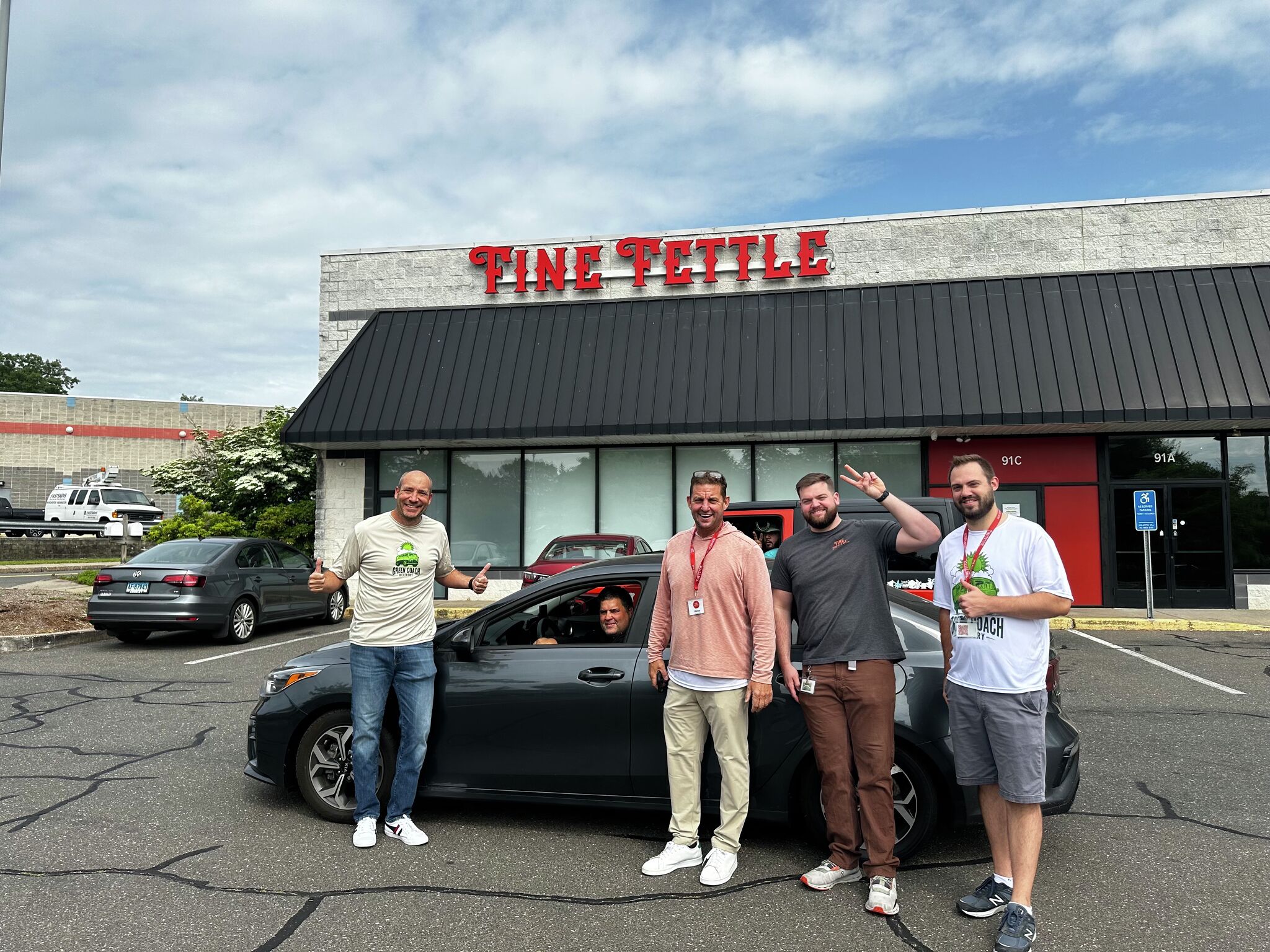
Fine Fettle is the first to offer delivery in Connecticut, but it won’t be the last. Fine Fettle has partnered with Jack Cochran, owner of Green Coach Delivery, who is currently one of 12 licensed cannabis delivery services in the state.
So far, demand has been low, so Zachs said delivery times are short.
“Because the demand has not been insane yet, we’re pretty close to doing this on-demand,” he said. “If you put in a delivery for the next available delivery window, you’re going to get your product within two hours. That’s not much worse than UberEATS and DoorDash.”
How cannabis delivery works
There are limitations and restrictions to where cannabis can be delivered and how much. The same quarter-ounce limit by which customers must abide at retail locations holds true for delivery.
Cannabis must be delivered to a customer’s legal address, Cochran explained.
“It just can’t be can’t be like a hotel, a halfway house, it can’t be Mohegan Sun,” Cochran said. “We get a lot of inquiries from casinos.”
The deliverer, Cochran said, comes to the door of the residence, though they “don’t go inside of an apartment complex. We meet at the exit door.”
“In most cases so far we’re seeing customers already at the door, coming outside as the driver’s getting there,” he said.
Cochran said it’s a “three-step process.” It begins on the retailer’s website — in this case Fine Fettle — where a customer will select their desired products. “The system will keep them within the framework of state regulations, and staying within the limits.”
Customers will select the delivery option and specify a requested time for delivery. “Then we pick it up and we bring it to the home,” Cochran said.
After ordering online, customers can expect a series of communications from the delivery service.
“We have extensive communication, so the customer knows when the driver leaves. The customer is always given at least one phone call, when they’re next in queue with an ETA,” Cochran said. “They’re getting, sometimes, two or three text messages in between.”
The final step is an in-person certification process, during which customers will sign a manifest and and the driver will verify age and identity.
“Then they receive the product,” Cochran said.
Where cannabis delivery is expected next
Though cannabis delivery is currently limited to five towns, both Cochran and Zachs said to expect a wider service area soon. Cochran said they’re using customer analytics to determine into which towns he should expand.
Zachs said he’s hoping Fine Fettle’s Stamford location will offer delivery in the coming weeks.
“In Stamford, my guess is we’ll make it available in Fairfield County with the delivery operator partner we’re working with there,” he said.
Delivery services themselves are subject to a series of restrictions, as Amanda Ostrowitz explained. Ostrowitz runs a company called Slap Ash, which has also been granted a cannabis delivery license.
“Connecticut does not allow the delivery companies to hold their own inventory. What it enables them to do is pick up an order from a licensed dispensary and bring it to the end consumer and nothing more,” she said after her delivery license was granted. “They can only hold on to product for 24 hours. If it’s going to take more than 24 hours for some reason to complete delivery, it’s got to return back to the store where it began.”
Every cannabis delivery vehicle must have a GPS tracking system, and the product itself must be secured in a lock box during transport. Drivers must have verified drivers’ licenses and be registered with the state.
In addition, drivers will not be able to deliver other items, such as food, along with cannabis. UberEATS, for example, can deliver anything from anywhere, but not cannabis delivery services.
“This will be specifically, only, for the delivery of cannabis,” Ostrowitz said.
No Byline Policy
Editorial Guidelines
Corrections Policy
Source