
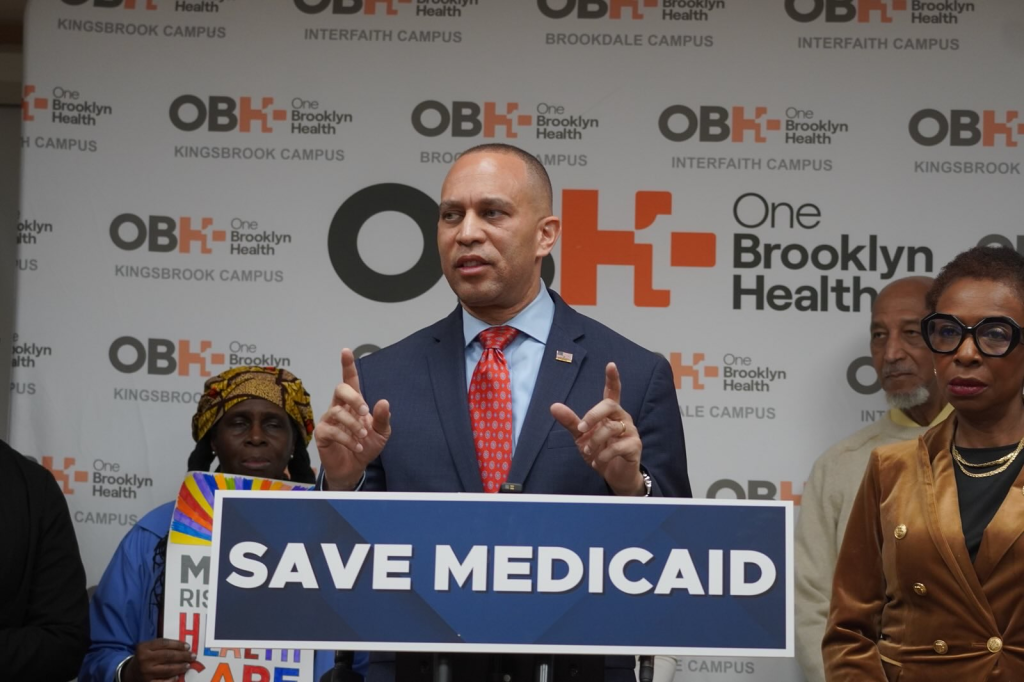
Fate of Medicaid is in hands of House
The fate of millions of Americans’ Medicaid enrollment, including more than 200,000 in Missouri, was being debated Wednesday in the House of Representatives.
The Senate passed its version of the Budget Reconciliation Bill on Tuesday, and many medical experts and social agency representatives agree that there would be a cataclysmic impact on American healthcare if the House gives its approval.
Sen. Josh Hawley, who suggested he could not approve the Senate version of the bill, did finally vote with his fellow GOP senators to approve the bill.
Sen. Eric Schmitt also voted yes, not surprisingly as he stood with President Trump in support of the bill that guts Medicaid, SNAP benefits, while slicing taxes for the wealthy.
The Senate version passed 51-50. Vice President J.D. Vance cast the deciding vote.
“Josh Hawley & Eric Schmitt just voted to sell out the people of Missouri,” said Missouri Democratic Party Chair Russ Carnahan.
“This bill hikes energy bills, guts health care for working families, and will force rural hospitals to close all to send billions in tax breaks to the ultra-wealthy and corporate special interests. It’s a direct betrayal of the people he was elected to represent.
“Despite weeks of pretending to be undecided and voicing concerns about Medicaid cuts, Hawley weakly caved to GOP leadership and cast his vote in favor of the bill.”
Democratic Congressman Wesley Bell voted no on the original House version of the bill while Ann Wagner, a Republican, voted yes.
According to recent reporting and economic analysis:
- Missouri households will face $2.1 billion in higher energy costs over the next decade
- 37,400 jobs will be lost by 2035
- Missouri’s GDP will shrink by $27 billion
- Up to 250,000 Missourians could lose their health insurance
“This is what politics over people looks like,” Carnahan said.
“Josh Hawley put ambition and party loyalty ahead of the health and economic security of Missouri families. Voters won’t forget this vote, and we won’t let them.”
Richard E. Besser, MD, president and CEO of the Robert Wood Johnson Foundation, issued the following statement in response to the Senate passage.
“As communities prepare this week to celebrate American rights of life, liberty, and the pursuit of happiness, the Senate has decided to reverse generations of progress on all three. America is at its best when all families and communities have what they need to be healthy and thrive. By contrast, the Senate’s bill takes those things away, stripping people’s ability to live with dignity, security, and the assurance of having their basic needs met,” he wrote.
According to Besser, the bill cuts nearly $1 trillion from essential health programs like Medicaid and SNAP.
“Millions of hard-working people will lose healthcare coverage and food assistance under the heavy burden of new punitive governmental red tape. By its very design, the bill will make our country sicker, put children at risk of going hungry, and make it harder for families to afford basic necessities.
“People with disabilities will lose critical healthcare coverage that allows them to work and live independently. Rural communities across America will be decimated from hospital closures, and people will lose their lives. It is unfathomable to see policymakers intentionally inflict so much damage on the people they represent.”
Amy Blouin, president and CEO of Missouri Budget Project, said “Despite the rhetoric from DC, this bill puts Medicaid and food assistance at risk for all Missourians, even when they’re eligible, and even when they meet requirements.”
“The bill undermines our country’s long-standing commitment to make sure families don’t go hungry. And it’s a particular blow to Missouri’s rural communities, where some health care providers may have to shut down and local economies will be hurt.”
Blouin said Missouri will struggle to pick up costs, and state lawmakers will face extremely difficult choices, like whether to get rid of SNAP in Missouri, eliminate optional benefits like home- and community-based services that keep people living in their communities, or cut funding for services like education.
Thousands of other Missourians will lose health coverage due to other changes in the bill affecting health care insurance through the marketplace created by the Affordable Care Act.
“The harms from this bill will affect all Missourians,” said Blouin.
“When people don’t have insurance, they still get sick, but their care is more likely to be in an emergency setting. And when hospitals can’t recoup their costs, it increases the cost of healthcare and insurance for us all.”
“This entire bill is about choices. So far, Congress has made the choice to increase the nation’s deficit and prioritize the wants of the 1% over the basic needs of millions of Americans.”
Related
No Byline Policy
Editorial Guidelines
Corrections Policy
Source