
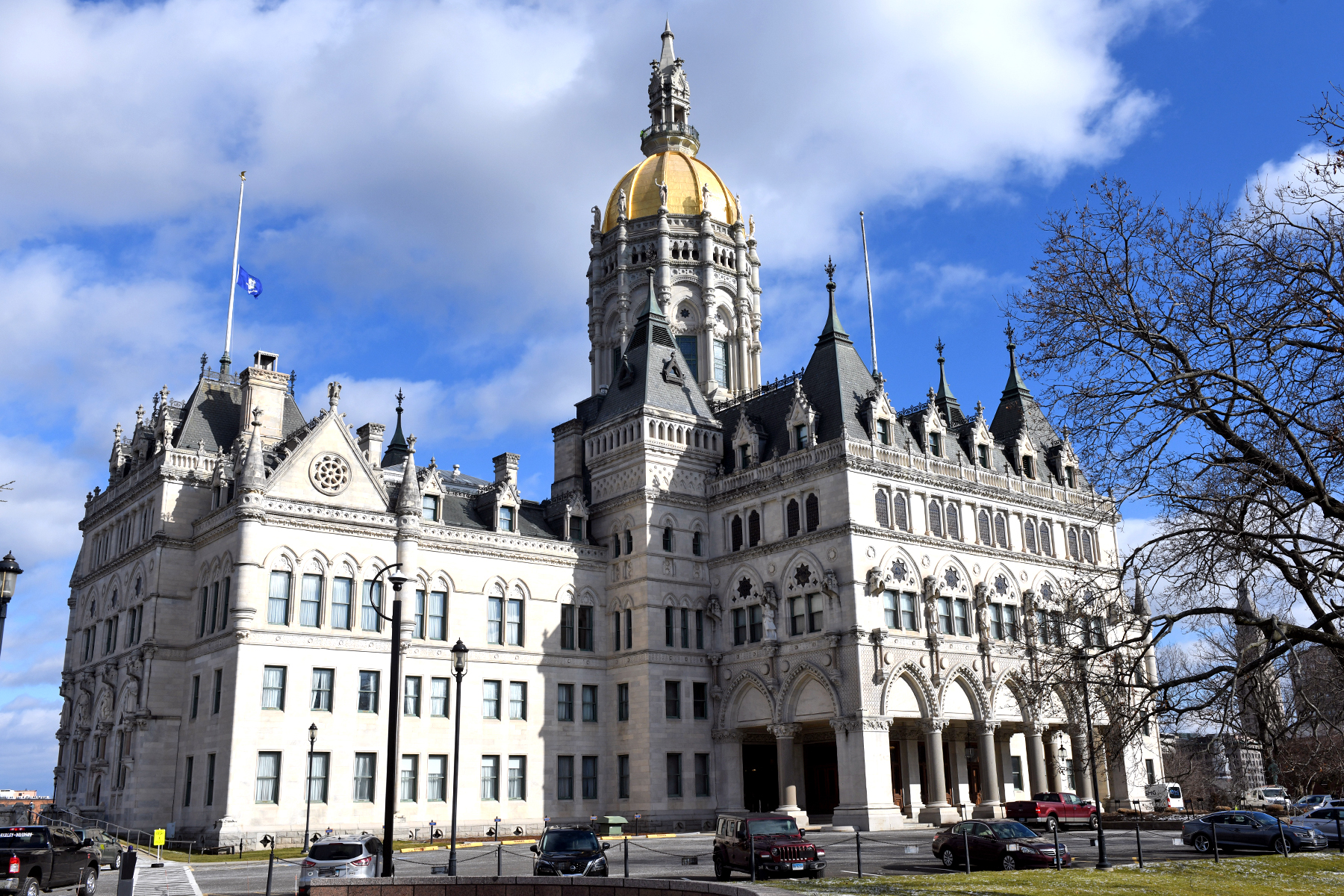
Dozens of bills pass in CT legislature
HARTFORD — While the over-arching goal of the current legislative session is to create a new two-year state budget to take effect on July 1, dozens of other bills are being debating and voted on in the rush of business that ends at midnight on June 7 in the part-time General Assembly.
Among notable bills that have gained traction in the House, Senate or both in recent days, is legislation on voter access to the polls, outdoor cannabis growers, the safety of nesting shorebirds and the last word on absolving accused witches who were executed during the colonial era of the 17th century.
Late last Thursday night, the Senate passed a voting rights act named in honor of the late U.S. Rep John Lewis of Georgia who fought voter discrimination dating back to the civil rights campaigns of the 1960s. If approved in the House and signed into law by Gov. Ned Lamont, the law would prohibit towns and cities from creating any municipal elector qualifications that could impair vote access for members of a “race, color, or language minority group” under federal guidelines.
It would also authorize the secretary of the state to join aggrieved parties to file actions in state Superior Court; and create a statewide information database in the secretary of the state’s office to assist towns and cities in evaluating their local elections laws, and investigate possible infringements of the right to vote. The legislation was introduced by Sen. Mae Flexer, D-Killingly, co-chairman of the Government Administration and Elections Committee, who led the prolonged Senate debate..
Conservative Sen. Rob Sampson of Wolcott, a top Republican on the GAE Committee, sparred with Flexer and charged that the proposal was a power grab for the secretary of the state. He proposed several amendments that were rejected along party lines. The debate stretched for more than four hours before the bill was approved 27-9, with Republican opponents including Sampson, Senate Minority Leader Kevin Kelly of Stratford, Sen. Eric Berthel of Watertown, Sen. Paul Cicarella of North Haven and Ryan Fazio of Greenwich.
Republicans who voted for the bill included Sen. Tony Hwang of Fairfield, Sen. Stephen Harding of Brookfield and Sen. Henri Martin of Bristol. Democrats hold a 24-12 majority in the Senate and a 98-53 edge in the House.
Cannabis grow expansion
On Tuesday, the House voted mostly along party lines, 93-54, to allow small cannabis growers with status under the Social Equity Council, to establish outdoor grow facilities in areas beyond locations that have been designated as disproportionately impacted in the failed war on drugs, but still located within their towns or cities. Rep. Mike D’Agostino, D-Hamden, co-chairman of the General Law Committee, gave the example of a grower in his hometown who has access to farmland elsewhere in the town, but outside the disproportionately impacted area that made them eligible for the license.
Threatened shorebirds
Connecticut’s endangered and threatened shorebirds would receive new protections on their summer breeding grounds under new legislation passed by House lawmakers on Thursday.
The bill, which passed the House by a vote of 118-29, would authorize the Commissioner of the Department of Energy and Environmental Protection to establish a seabird and shorebird protection program, along with a list of species to include in the management program.
In addition, the commissioner would be able to rope off areas of coastal habitats on state-owned lands between the months of March and September — when many birds flock to the shores of Long Island Sound to breed — and place signs letting visitors know that the marked areas are off-limits.
Coincidentally, the DEEP announced on Friday that Charles Island in Milford and Duck Island in Westbrook will be closed until September 10 to help nesting birds avoid human confrontations. Both islands are important nesting habitats for birds including snowy egrets, great egrets, which are a threatened species, glossy ibis, and little blue herons.
‘Witches’ absolved
The Senate gave final approval on Thursday to a symbolic resolution formally absolving colonial residents of the state who had been executed over allegations of witchcraft and “familiarities with the devil.”
The vote on the resolution came nearly 376 years to the day that Windsor’s Alice “Alse” Young became the first person in the American colonies to be executed for witchcraft. Her hanging came nearly a half-century before the infamous witch trials took place in Salem, Mass.
Eventually, the colonial government in Connecticut would bring charges against at least 34 men and women for alleged witchcraft, according to the resolution. Twelve of those were convicted, and 11 were killed for their supposed crimes.
The resolution was filed in the House earlier this year as an effort to exonerate those convicted of witchcraft, but the language was amended in the House after some Republicans argued that the state had no standing to overturn legal decisions handed down by another county — in this case the British.
Instead, the language of the resolution offered an apology on behalf of the State of Connecticut to the descendents of those who were accused of witchcraft, as well as an absolution for those who were convicted and executed.
The Senate voted 33-1 in favor of the resolution, with Sampson, casting the sole dissenting vote.
No Byline Policy
Editorial Guidelines
Corrections Policy
Source