
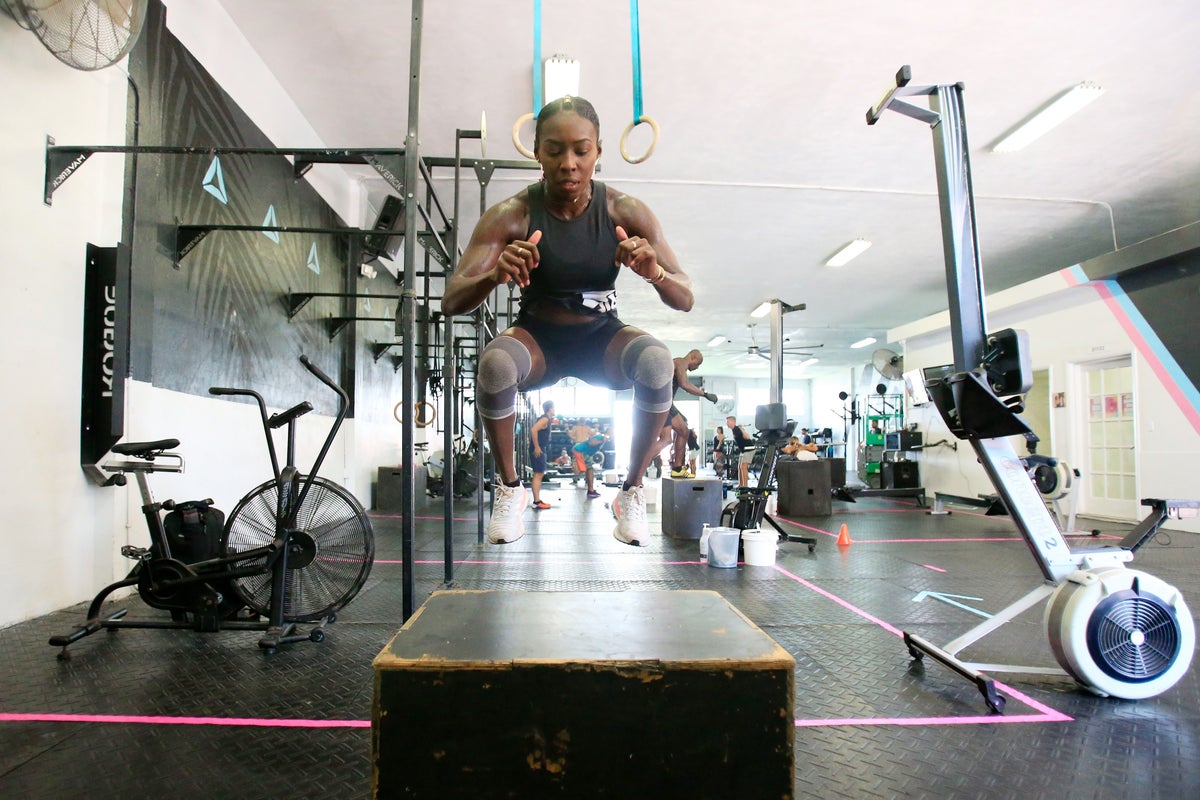
Jumping could be the key to staying healthy as we age
Your support helps us to tell the story
From reproductive rights to climate change to Big Tech, The Independent is on the ground when the story is developing. Whether it’s investigating the financials of Elon Musk’s pro-Trump PAC or producing our latest documentary, ‘The A Word’, which shines a light on the American women fighting for reproductive rights, we know how important it is to parse out the facts from the messaging.
At such a critical moment in US history, we need reporters on the ground. Your donation allows us to keep sending journalists to speak to both sides of the story.
The Independent is trusted by Americans across the entire political spectrum. And unlike many other quality news outlets, we choose not to lock Americans out of our reporting and analysis with paywalls. We believe quality journalism should be available to everyone, paid for by those who can afford it.
Your support makes all the difference.Read more
Jumping might just be the key to aging well, according to experts.
The exercise can help strengthen our bones, which weaken over time as we age and our rate of bone formation slows.
Jumping has been found to increase bone density, a measure of the amount of calcium and other minerals in bone that indicates which are strong and which may be more likely to break.
Just 10 high-impact jumps made twice a day over the course of four months was found to be enough to significantly increase hip bone density for 60 women between the ages of 25 and 50 years old, according to a study published in 2014.
“Our study showed significant benefits over time,” Dr. Larry Tucker, a professor at Brigham Young University, told Prevention.com then. “Women have to do the jumps daily to get the benefits. In addition, keep in mind, as women age it’s more and more difficult to improve bone density.”
open image in gallery
Jumping could be the key to aging well and staying strong, according to experts (Getty Images)
Women lose bone density earlier and faster than men because they have smaller and thinner bones than men. The female hormone estrogen, which regulates sexual and reproductive health, decreases sharply when a woman reaches menopause. This dip causes bone loss, according to the Bone Health & Osteoporosis Foundation.
Both of these factors leave women at a greater risk of developing osteoporosis, a condition that can result in bone fractures — even when people cough. An estimated 10 million Americans are living with osteoporosis, more than 8 million of whom are women.
However, bone loss affects both men and women, and 44 million Americans have low bone density, according to the American Medical Association. Genetics and other health conditions can also play a significant role in determining how quickly bones weaken.
This is why lifestyle choices are “pivotal” to maintain optimal bone health, according to The Ohio State University. People need to eat a variety of fruits and vegetables that can provide essential vitamins and minerals, and strength training at the gym is crucial, Dr. Jackie Buell, a sports dietitian at the school, explained.
“The nature of the exercise you want to do to help your bones is something that loads the bone, like jumping for the hips or push-ups for the wrists,” she said.
And you don’t need to do it every day. Just a few dozen jumps done a couple of times a week could “go a long way in benefiting your bone health throughout your lifespan,” Pam Bruzina, a professor of nutrition and exercise physiology at the University of Missouri, recently told The Washington Post. Improvements to bone density may be seen in as little as a half a year.
open image in gallery
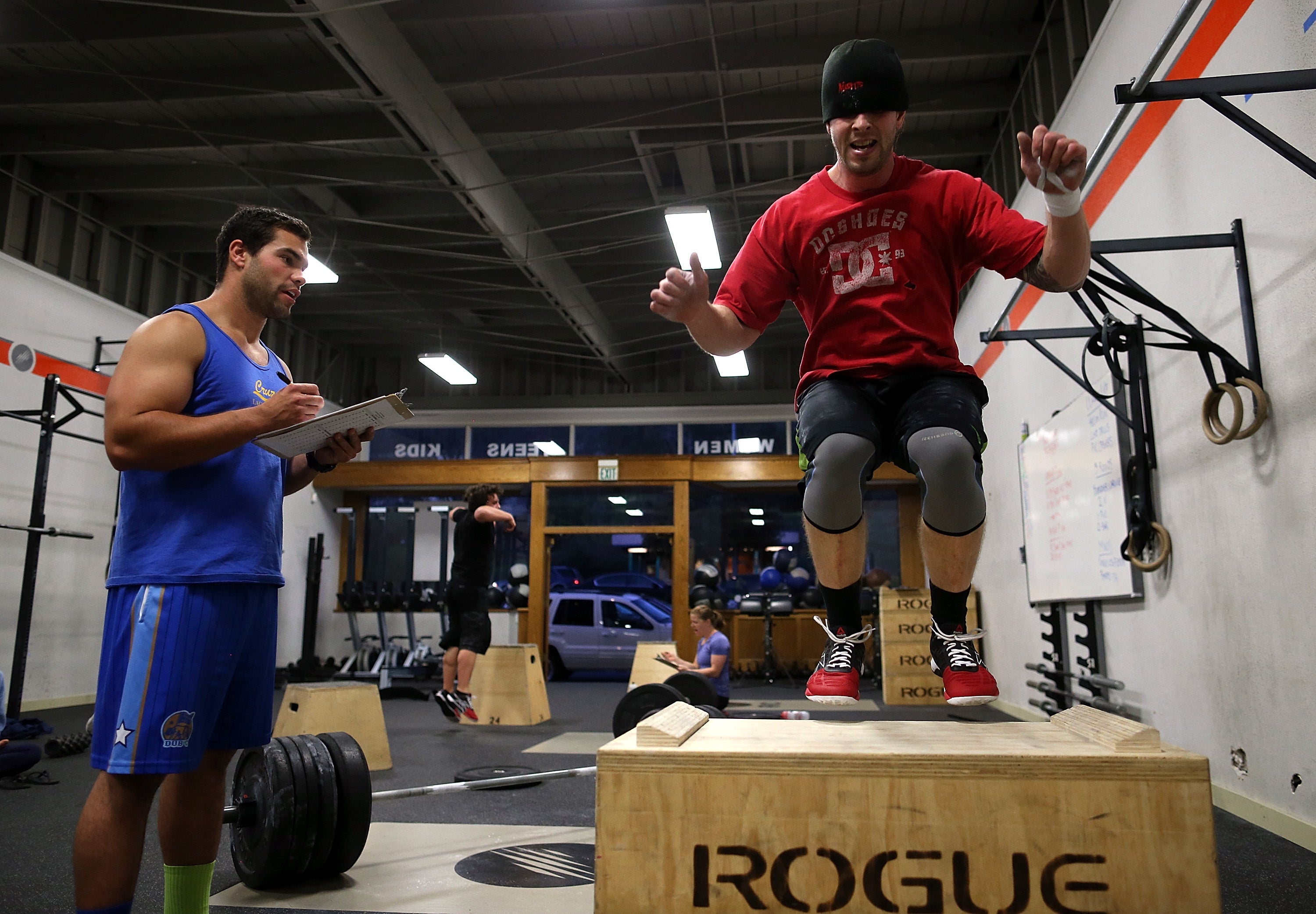
Anything with a hard landing that stresses the skeleton helps to stimulate bone growth (Getty Images)
This should be true for both younger and older adults, researchers told The Post, even as most people reach peak bone mass in their early 30s.
But, some may need to jump with more caution than others. If people start jumping regularly without muscle to support them or while already experiencing joint pain, it might not be safe. Doctors say people with osteoporosis should not jump if they’re unsupervised, as they would be at risk of a fracture.
A few months of resistance training to strengthen muscles around the hip and spine can help ensure jumpers aren’t hurting their joints.
If you’re ready now, it’s important to know that not all jumps provide equal benefits to bone health. They can be explosive back and forth, side to side, or box jumps.
While a more fun way to jump, jumping rope is not advised, because the point is maximizing the landing and putting stress on the skeleton. That process helps to stimulate bone growth.
“Any intervention that slows that loss or mitigates it is better than nothing,” Jocelyn Wittstein, an associate professor of orthopedic surgery at Duke University School of Medicine, told The Post, noting that “any load-bearing activity on your legs is better than being sedentary.”
No Byline Policy
Editorial Guidelines
Corrections Policy
Source