
Running the backlog of treatment
Two several years into the pandemic, governments throughout the world have commenced to take it easy their social distancing guidelines. Having said that, health care devices continue to be seriously impacted by ongoing bacterial infections and a expanding backlog of people waiting for planned solutions.
Whilst vaccines have been really successful in cutting down hospitalization and mortality rates, infection handle procedures continue on to impact our hospitals’ typical functions. In many respects, COVID-19 developed a excellent storm. It came at a time when a lot of health care methods were being previously seriously pressured, dealing with an rising stress of disease in just growing older populations, and chronic team shortages.
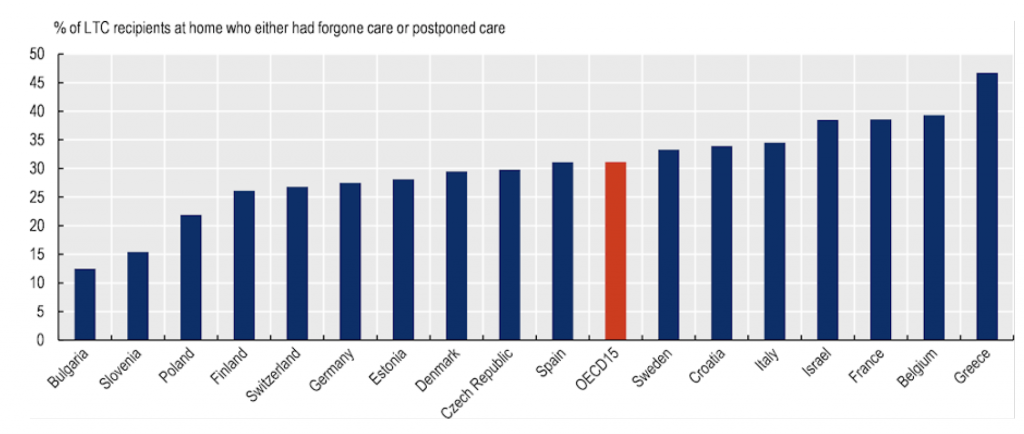
The pandemic suspended most non-urgent, elective processes and ambulatory treatment consequently, the treatment backlog elevated. In England by yourself, 6 million men and women were being waiting around for cure at the end of December 2021. It is estimated that 8 million people have undiagnosed situations, and these are the people today who stayed away from their health care suppliers for anxiety of catching COVID-19.1 The predicament is identical throughout Europe and North The usa, with the Group for Financial Co-operation and Progress (OECD) reporting major quantities of people today with long-phrase disorders lacking crucial facets of their treatment.2
Source: Firm for Economic Co-procedure and Development
They say, “necessity is the mother of innovation,” which was plainly the case in the course of the pandemic. Speedy growth of vaccines, novel use of medicines to treat infected patients, and monumental acceleration of digital treatment paint a picture of innovation. Publish-pandemic, some commentators are suggesting this innovation must continue with the recovery, offering international locations a distinctive opportunity to adjust points for the better, addressing wellbeing inequalities, and raising sustainability.3
From a technological know-how viewpoint, healthcare providers can make the most of the lessons learned through the pandemic. They can carry out new means to accelerate the flow of individuals from their backlog into remedy and then on to a swift discharge and rehabilitation.
At each stage of this journey, holding in regular speak to with the affected person will be significant to the good results of the entire process. In several approaches, the operational complexity of running backlogs, medical capability, and employees schedules echoes the complexity and interdependencies of the fundamental specialized infrastructure. Trying to keep people swiftly flowing through the method calls for every single cog in that system to operate flawlessly, at all times.
Adopting a cross-architectural check out of their IT infrastructure and a platform strategy will allow healthcare vendors to accelerate their electronic abilities, automate affected individual outreach by way of technology and self-support, and maximize the move of sufferers by way of the care continuum.4
From a patient’s viewpoint, healthcare providers ought to be deploying electronic answers that can:
- Use the time just before treatment method to educate and tell individuals about their problem5
- Watch changes in circumstance that may perhaps alter the precedence or therapy pathway
- Obtain pre-operative details and put together individuals for admission
- Streamline the journey via the hospital by monitoring persons and assets
- Cut down in-individual stays by enabling sufferers to go house as shortly as they are medically suit
- Stop unwanted readmission by supplying write-up-acute remote care or checking
- Notice each phase of the electronic journey to make certain it is conference anticipations
Ultimately, the amount of people ready for therapy will normalize when care teams have the capability to deal with them. While automatic procedures and synthetic intelligence increase the expertise of a healthcare skilled, they will by no means replace the human touch. To handle the workforce problems, healthcare vendors will want to reimagine clinical operations and adopt know-how-driven procedures that boost efficiency. This will reduce the stress on clinical employees and maintain persons within the healthcare career.
Speedy innovation was commonplace at the height of the pandemic, with virtual treatment starting to be the norm. Though the direct affect of the pandemic on society is now waning, there are extra persons waiting around for procedure now than at any time in advance of. To deal with this backlog, healthcare vendors should carry on innovating, growing their digital gives by investing in their fundamental specialized infrastructure, adopting a cross architectural approach, and ensuring that their electronic answers deliver a frictionless practical experience to patients and staff members.
Resources:
- NHS backlog & waiting around instances in England
- Growing from the COVID 19 disaster: Plan responses in the lengthy-term treatment sector
- WHO Manifesto for a wholesome restoration from COVID-19
- The system engage in: How to function like a tech enterprise
- NHS Wait Properly system
Share: