
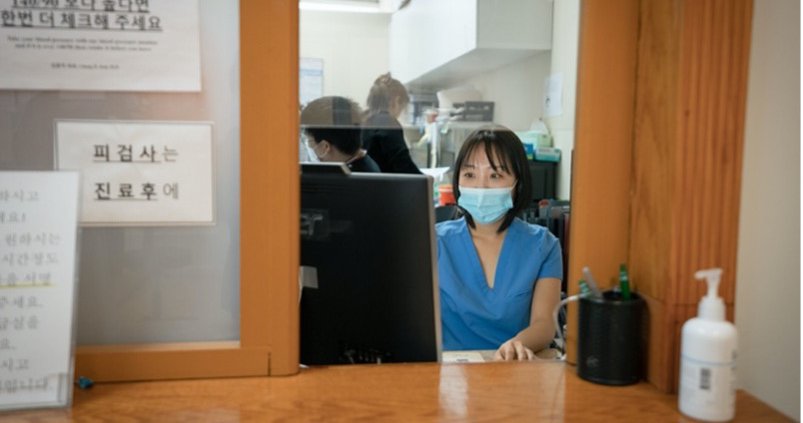
How Independence Blue Cross is working with doctors to improve members’ health
Preventive screenings are key to preventing many illnesses and detecting
health conditions in the earlier stages when they are most treatable.
But, in our on-the-go world, people are busy trying to keep up with life’s
day-to-day demands. Traveling to get a preventive screening is not always on
the top of the “to-do” list. Especially if you don’t have transportation,
are worried about having to spend a long time in the waiting room, or are
anxious that the staff won’t speak your language.
Independence Blue Cross
(Independence) Population Health Specialists can make it easier for patients
to get the preventive screenings they need. It’s one of the many things they
do to improve patients’ health. They work closely with primary care doctors
to develop strategies and leverage tools that help identify gaps in care and
resolve them.
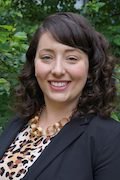
Lia Scalzo, Population Health Specialist
Lia Scalzo, DrPH(c), MPH, CHES, CMI, has been a population health specialist
with Independence for two years. Through her work, she has seen how even the
smallest changes to a practice can have a drastic impact on patients’
health. Scalzo helps practices identify which patients need to be screened
and comes up with ways to ensure the screenings happen. One way she does
this is by bringing mobile screening units to primary care doctors offices.
“Wherever screening can be mobile, it should be,” Scalzo said. “Lives are
busier, sentiments change, and people are feeling more uncomfortable with
the idea of entering a hospital or an unknown space to prioritize this type
of care.”
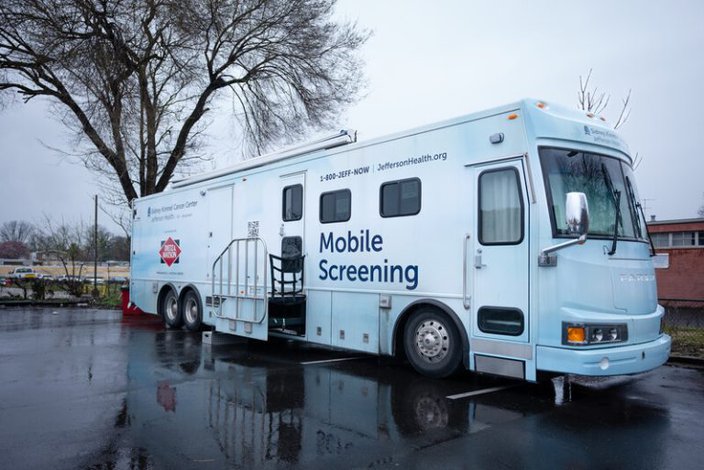
Scalzo supports several practices throughout the region. Dr. Chong Duk Kim,
a primary care doctor with a practice in Philadelphia, runs one of the
practices she works with often. She has helped bring
Jefferson
Health’s
Mobile Cancer Screening Van
to her office on multiple occasions. Her patients have been able to
pre-schedule appointments to be screened for breast cancer on the van while
it’s there. They have had little to no wait and less anxiety because they’re
already comfortable with the office. There are also fewer language barriers
for those whose first language isn’t English, because the office has staff
who know the patients and can help translate.
“True access to health care goes beyond removing physical and financial
barriers. It’s about understanding and meeting patients at their level, with
respect and empathy, and empowering them to take an active role in their
health journey,” Dr. Kim said. “When we remove the barriers to health care,
we increase access and build trust, foster communication, and promote a
culture of health equity. By acknowledging and addressing patients’ unique
needs and circumstances, we can create a health care system that truly
serves and supports everyone.”
The van gives patients a quick and easy way to prioritize and maintain their
breast health in just 20 minutes (10 minutes to register and 10 minutes to
get screened). Patients change in a private area and are screened by a
certified mammography technologist from Jefferson Health. Screening results
are later provided by the patient’s primary care doctor. Scalzo has also
helped bring
Fox Chase Cancer Center’s Mobile Screening Unit
to practices.
Scalzo and other Population Health Specialists are also piloting a mobile
diabetic eye screening program at several practices. The goal of the pilot
is to help more members get screened and reduce their risk of damage from
diabetic retinopathy.
“Offices can be stretched thin. We have the bandwidth to help them make
little changes that can have a big impact. I love working with independent
practices to help them achieve their goals and grow,” Scalzo said. “Even
helping them simply adjust the way they communicate with patients can help
get more people into the office for care.”
Scalzo does more than bring mobile screening to practices; she helps them
identify and address overall gaps in care by sharing reports that give
doctors a full picture of their patient population.
“I love being able to be a face that a practice can go to when they’re
facing an issue. I can be a real person who can hear them on the
real issues they’re facing and come to them with real
solutions based on real data,” Scalzo said. “At the end of the day,
we all want the same thing – to build happier and healthier communities. And
I’m proud to play a part in that.”
With a master’s in public health, Scalzo was drawn to the role because she
loves looking at health care through the lens of prevention versus
treatment. She values the role that medicine plays in our well-being and
wants to find ways to work with patients and practices to make health care
more accessible.
Independence is a leader in value-based care. That means the doctors and
hospitals in our network are paid based on the quality of the care they
give, not the volume of services they deliver. We work with them to be sure
they have the tools, data, and support they need to understand their
performance and deliver the most effective care to their patients. It is
dedication from population health specialists like Scalzo that help make
this happen.
This content was originally published on
IBX Newsroom.
No Byline Policy
Editorial Guidelines
Corrections Policy
Source